Play Therapy
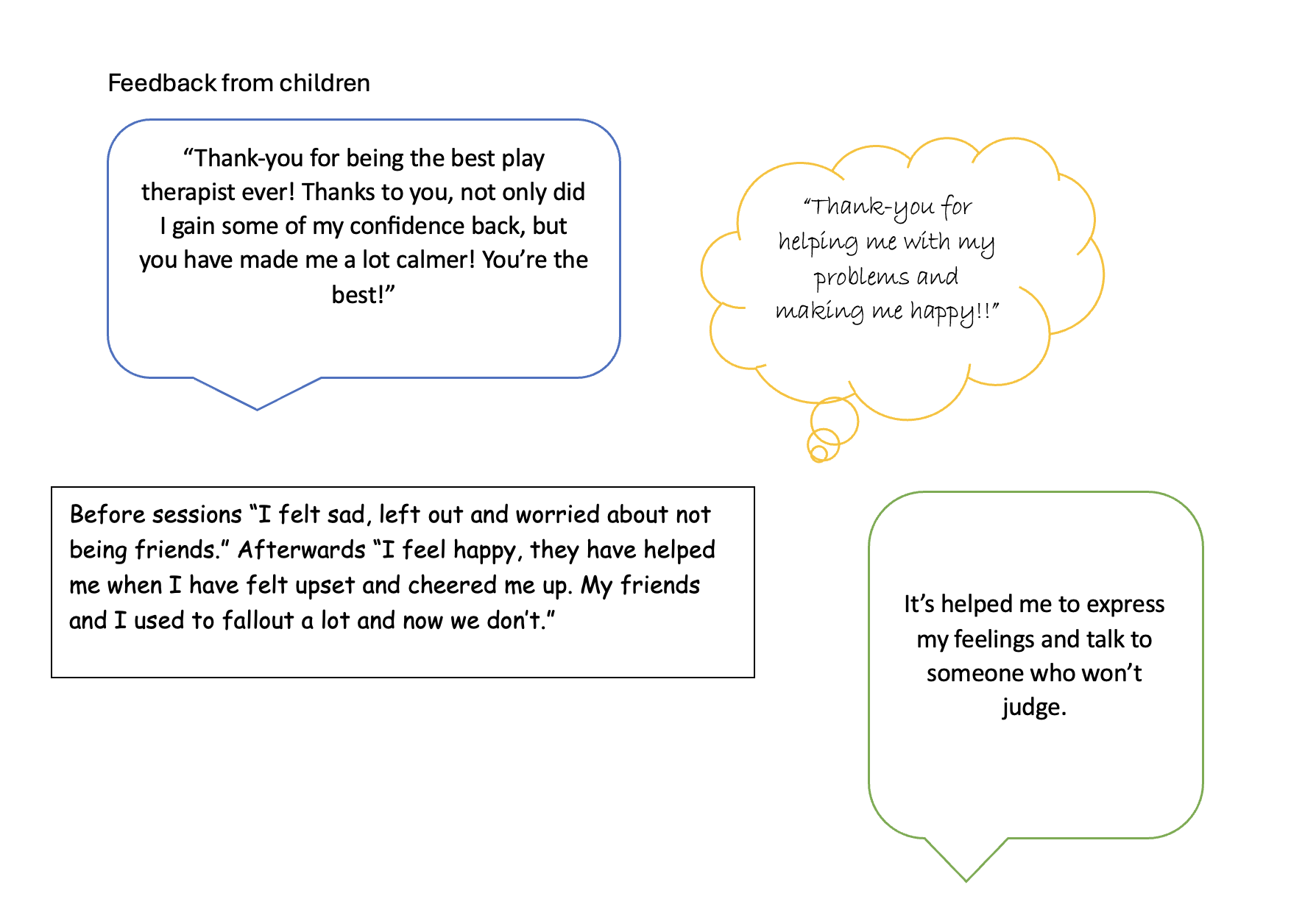
Play is a child’s natural language. Play Therapy provides children with a safe, supportive and confidential space where they can explore and express their feelings, experiences and worries through play in a way that feels natural and comfortable for them.
Play is a child’s natural way of communicating and making sense of the world. During Play Therapy sessions, children are provided with carefully selected toys, creative materials and activities that enable them to communicate and explore experiences in a way that feels natural and accessible to them. With the support of a trained Play Therapist, the therapist provides a calm, accepting environment where children feel heard, understood and supported, helping them grow in confidence and emotional wellbeing. Play therapy is tailored to their individual needs and can complement the support they receive at home and in school.
Play Therapy at Alumwell Junior School is delivered in accordance with the principles and professional standards associated with Play Therapy UK (PTUK). PTUK promotes the use of Play Therapy to support children’s emotional wellbeing and development and provides professional standards, training and registration for practitioners working within the field.
https://playtherapy.org.uk/what-is-play-therapy/
We recognise that the most effective support for children comes through positive partnership between the child, school, therapist and family. Where appropriate and with due regard to confidentiality, the Play Therapist works with school staff and parents/carers to support the child’s progress and help therapeutic strategies become part of their wider experience. Our aim is to provide children with a safe and nurturing space where they can be heard, understood and supported, helping them to develop the emotional wellbeing, confidence and resilience they need to thrive.
How can Play Therapy help?
Play Therapy may support children who are experiencing difficulties in many areas, such as:
- Anxiety, worries or low mood
- Emotional regulation and managing strong feelings
- Low self-esteem or confidence
- Difficulties with friendships or relationships
- Anger or challenging behaviour
- Changes or difficult experiences at home or school
- Bereavement, separation or loss
- Difficulties with communication or expressing feelings
- Difficulties settling into school or engaging with learning
- Social and emotional difficulties that are affecting everyday life
Play Therapy is individualised to each child. The therapist works alongside the child to understand their individual needs and provides a therapeutic environment in which they can explore their experiences at their own pace.
What happens during Play Therapy?
Play Therapy sessions take place individually in a dedicated, safe and appropriately resourced space within school. Sessions provide the child with opportunities to use play, creative activities, storytelling, role play and other expressive approaches to communicate and explore their thoughts and feelings.
The Play Therapist follows the child’s lead while providing appropriate therapeutic boundaries and support. Over time, this can help children develop a greater understanding of themselves and their emotions and identify more positive ways of responding to challenges.
Every child is different, Play therapy is tailored to each child’s individual needs. The aim is not simply to change behaviour, but to help children understand what they are feeling, develop positive coping strategies and build the emotional skills they need to flourish.
Could Play Therapy Support Your Child?
If you feel that your child may benefit from Play Therapy or would benefit from additional support with their emotional wellbeing, behaviour, relationships or confidence, please contact the school office. A member of the school team will pass on your details to the play therapist/social mentor, who will be able to provide further information about the support available and explain the referral process.